
Ho Chi Minh City is seeking to transform its logistics industry from the traditional “trucks – warehouses – storage yards” model into a smart, integrated logistics ecosystem built on multimodal transport, digital data, and value-added services. The shift is expected to strengthen the city’s competitiveness, reduce logistics costs, and reinforce its role as a major supply chain coordination hub in Southern Vietnam.
Ho Chi Minh City Redefines Its Logistics Development Strategy
Under its master planning vision, Ho Chi Minh City aims to move beyond conventional transportation and warehousing services toward becoming a regional center for supply chain coordination and management. Rather than focusing solely on vehicles, warehouses, and storage facilities, the city is looking to leverage multimodal infrastructure, digital platforms, and higher-value logistics services.
According to planning figures, the city’s transportation and warehousing sector was projected to grow by an average of approximately 11.8% annually during the 2021–2025 period. By 2025, the sector’s value added was projected to reach around VND 253.1 trillion, equivalent to 8.5% of the city’s gross regional domestic product (GRDP).
Revenue from transportation, warehousing, and transport support services was also projected to increase from VND 223.9 trillion in 2015 to VND 590.8 trillion in 2024.
These figures highlight the growing importance of logistics to the city’s economy. However, the sector remains heavily concentrated in basic activities such as transportation, storage, cargo handling, delivery, customs clearance, and distribution. More sophisticated services, including supply chain management, trade finance, marine insurance, and risk management, remain underdeveloped.
The challenge, therefore, is not simply to expand physical infrastructure but to improve connectivity and coordinate the entire movement of goods.
Multimodal Transport: A Key to Improving Logistics Efficiency

In 2024, Ho Chi Minh City handled approximately 333.8 million tonnes of freight, with road transport accounting for 88.7% of the total volume. This high dependence on road transportation highlights both its central role and the need to develop alternative modes to ease pressure on the road network.
The city has significant potential to expand multimodal transport thanks to the Saigon and Dong Nai river systems, the Thi Vai area, seaports, industrial parks, and regional transport networks. However, inland waterway transport remains underutilized, while railway infrastructure is still insufficient to support direct container transportation from industrial zones to seaports at the required scale.
Planning experts have noted that the logistics chain linking production facilities, warehouses, and seaports has yet to be fully integrated. As a result, the advantages of individual transport modes have not been translated into their full economic benefits.
The key issue is no longer simply whether goods should move by road, river, or rail. Instead, the priority is to integrate these modes into a seamless transportation journey that minimizes waiting times, reduces unnecessary transfers, and optimizes total logistics costs.
Experiences from Singapore and Shanghai, China, demonstrate that a competitive seaport depends not only on port infrastructure but also on a well-developed hinterland logistics network connecting roads, railways, waterways, inland container depots (ICDs), and logistics centers.
Commenting on the strategic planning direction for the expanded Ho Chi Minh City, Dr. Ngo Viet Nam Son has proposed a strategic multimodal infrastructure corridor connecting Ho Chi Minh City, Binh Duong, and Ba Ria–Vung Tau. The corridor would integrate different transport modes into a coordinated development system, with each economic hub serving a clearly defined role.
Once transport routes and logistics hubs are effectively connected, the sector’s value can shift from simply moving goods to organizing and coordinating cargo flows.
Digital Logistics: From Cargo Transportation to Supply Chain Management
The draft 100-year master plan for Ho Chi Minh City envisions transforming the city from a traditional logistics service provider into a center for supply chain coordination and management.
Key priorities include regional trade and logistics data platforms, trade finance, risk management, digital logistics workforce development, and data analytics. Emerging technologies such as artificial intelligence (AI), the Internet of Things (IoT), automation, and robotics are also expected to improve operational efficiency.
In a modern logistics environment, companies do more than transport goods from one location to another. They need real-time visibility into cargo locations, vessel arrival schedules, warehouse capacity, suitable transport options, congestion conditions, opportunities for cargo consolidation or deconsolidation, and the availability of return loads for trucks.
This is where smart logistics create value: by connecting data and coordinating activities throughout the supply chain.
When transportation, warehousing, customs procedures, and financial information are integrated, businesses can reduce waiting times, minimize empty truck trips, optimize inventory levels, and improve delivery reliability.
Digital transformation can therefore help logistics providers lower operating costs while enabling them to offer more sophisticated services that meet the increasingly complex needs of manufacturers and import-export businesses.
The Cai Mep – Thi Vai Free Trade Zone Expands Logistics Opportunities
The proposed development of a free trade zone (FTZ) linked to the Cai Mep–Thi Vai port complex illustrates this ecosystem-based approach to logistics.
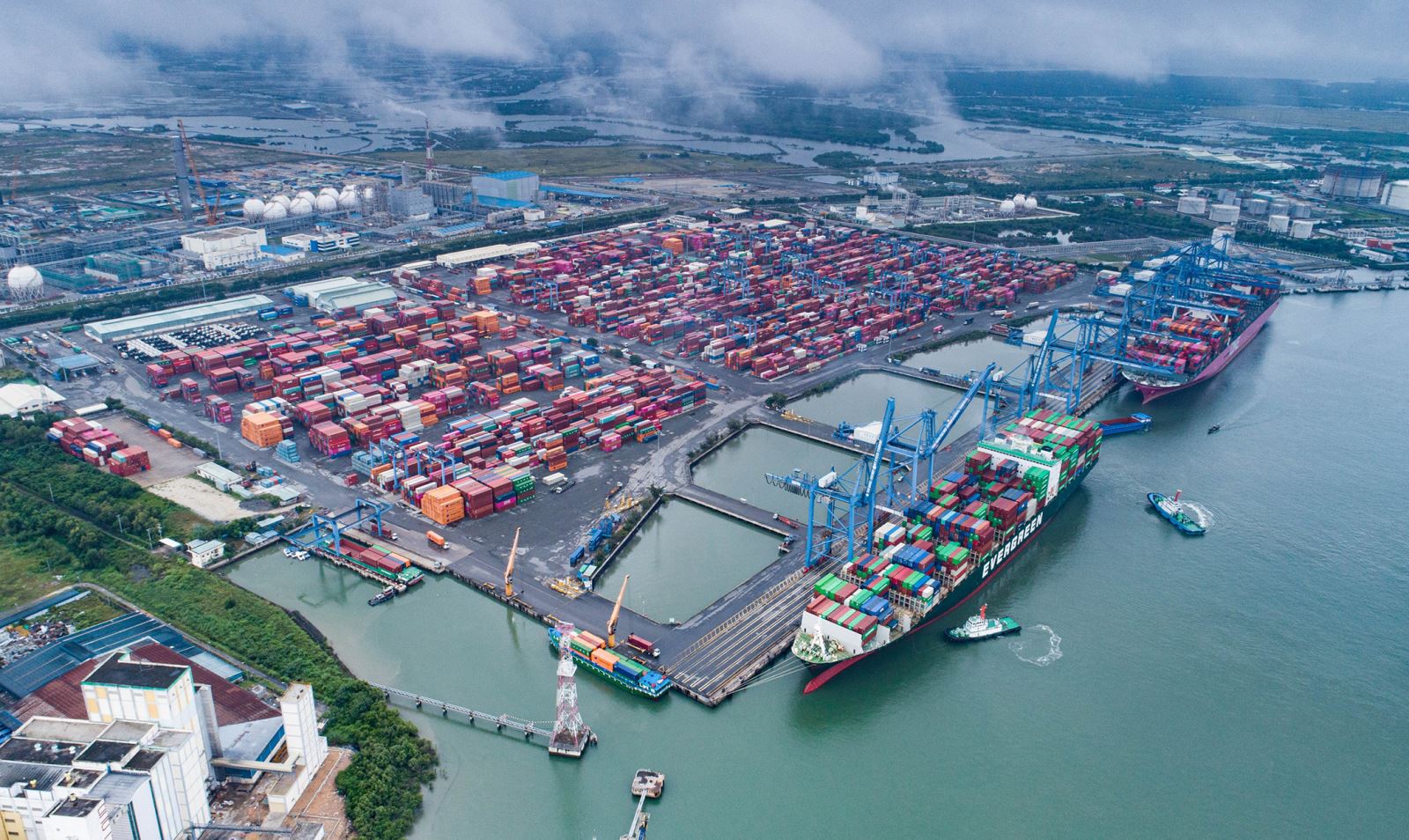
Rather than treating the FTZ simply as a designated area next to a seaport, the planning vision involves developing a broader ecosystem that includes bonded warehouses, distribution centers, returns management, inspection services, light processing, cross-border e-commerce, and trade finance.
This ecosystem would be connected to road, waterway, and freight rail networks, Long Thanh International Airport, and intelligent transportation information infrastructure.
If implemented in a coordinated manner, the model could help import-export businesses shorten cargo processing times, improve distribution efficiency, and expand access to international markets.
The integration of seaports, industrial parks, distribution centers, and trade support services could also create opportunities for higher-value activities beyond conventional transportation and storage.
This approach would strengthen the attractiveness of Ho Chi Minh City and Southern Vietnam to logistics providers, investors, and multinational companies seeking efficient cross-border supply chain solutions.
Regional Coordination Is Essential for Integrated Logistics Planning
Beyond infrastructure and technology, regional governance will be a critical factor in determining the effectiveness of the logistics system.
Architect Ngo Anh Vu, Deputy Director of the Ho Chi Minh City Institute of Construction Planning, has argued that administrative consolidation should generate genuine synergies rather than merely expand geographical boundaries.
According to him, previous regional coordination efforts lacked a sufficiently empowered mechanism to oversee development, resulting in fragmented planning and inconsistent infrastructure investment.
With a more unified administrative framework, the priority will be to reorganize the roles of economic hubs, transport corridors, and development resources. Manufacturing centers, logistics facilities, and seaports must be planned to complement one another.
For example, a high-tech product could be researched and designed in Ho Chi Minh City, manufactured in Binh Duong, and exported through the Cai Mep – Thi Vai port complex. When these activities are connected into a coordinated supply chain, the strengths of each location can be leveraged more effectively.
In logistics, this coordinating mechanism does not mean that a single organization must perform every task on behalf of businesses. Rather, it requires a shared governance framework through which physical infrastructure and digital systems operate together to deliver faster, more reliable transportation at lower total cost.
Physical and Digital Infrastructure Must Develop Together
To become a supply chain coordination hub, Ho Chi Minh City needs to develop two complementary layers of infrastructure.
The first is physical infrastructure, including roads, freight railways, waterways, seaports, airports, warehouses, and logistics centers.
The second is digital infrastructure, including supply chain data platforms, smart port management systems, electronic customs services, financial data, and traffic control centers.
These two layers must be integrated to enable businesses to manage cargo flows seamlessly from production facilities to final markets.
Investing in trucks, warehouses, and port facilities without corresponding improvements in data sharing and coordination may leave the overall system constrained by waiting times, congestion, and fragmented operational processes.
As a result, the performance of the logistics sector should not be measured solely by the number of trucks, the size of warehouse facilities, or port capacity. More meaningful indicators include delivery times, the number of cargo transfers, empty truck rates, warehouse utilization, and the added generated per ton of freight.
Ho Chi Minh City Targets a Leading Logistics Coordination Role in Southern Vietnam
With its industrial parks, seaports, river networks, airports, and extensive market access, Ho Chi Minh City has favorable conditions for developing a modern logistics ecosystem.
However, these advantages can only translate into stronger competitiveness if transport infrastructure is properly connected, data is shared efficiently, and transportation, warehousing, customs, and financial services operate as an integrated system.
The transition from the traditional “trucks – warehouses – storage yards” model to smart logistics is therefore not merely about adopting new technologies or expanding infrastructure. It represents a fundamental shift in how logistics services are organized—from providing separate operational services to coordinating entire supply chains.
By addressing infrastructure connectivity and regional governance challenges, Ho Chi Minh City could strengthen its position in international trade networks and emerge as a key coordinator of cargo flows throughout Southern Vietnam’s economic region.
Source:
https://www.vietnam.vn
https://vneconomy.vn
https://ghn.vn
https://titangroup.vn
Amasis Shipping Co., Ltd.
📞 +84 906 660 888
📩 info@amss.com.vn
🏘️27-29 Ngo Thi Bi Street, Tan Hung Ward, Hochiminh City