
Da Nang is concentrating its resources to prepare for the implementation of a series of urban, transport, seaport, and energy projects in the Chu Lai – Tam Ky – Nui Thanh area. With a total investment of up to tens of trillions of dong, the southern region is expected to become a new growth pole, expanding urban development space, attracting investment capital, and creating momentum to boost the city’s economy in the 2026–2030 period and beyond.
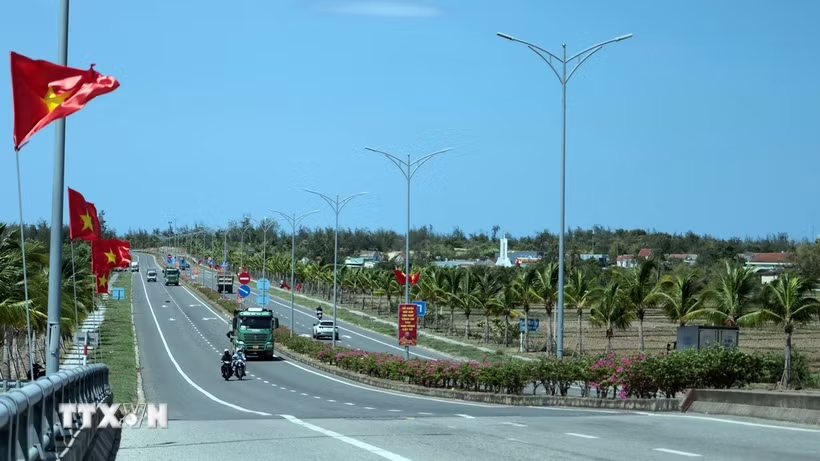
Chu Lai – Tam Ky – Nui Thanh Becomes a Strategic Development Pole of Da Nang
Da Nang’s development space stands before a new turning point as the city is oriented to expand its urban structure toward the south, forming economic, industrial, and service centers capable of supporting the existing central area.
According to Decision No. 2016/QĐ-TTg dated October 26, 2026, by the Prime Minister approving the General Planning of Da Nang City to 2050, with a vision to 2075, the city will develop under a multi-polar, multi-center urban chain model. Among them, the southern region comprising Chu Lai, Tam Ky, and Nui Thanh is identified as an important development pole, focusing on industry, energy, logistics, science and technology, innovation, and digital transformation.
This is considered a vital orientation in reorganizing the city’s economic space following administrative boundary restructuring. Instead of concentrating most urban and service activities in the central area, Da Nang aims to develop multiple economic poles with specialized functions, enhancing connectivity and efficiently exploiting the advantages of each locality.
In the new structure, the Chu Lai – Tam Ky – Nui Thanh area possesses numerous advantages to develop into a large-scale industrial, logistics, and service hub. Notably, the presence of the Chu Lai Open Economic Zone, Chu Lai Airport, seaport system, industrial zones, and land reserves for urban development create favorable conditions to establish a highly interconnected economic space.
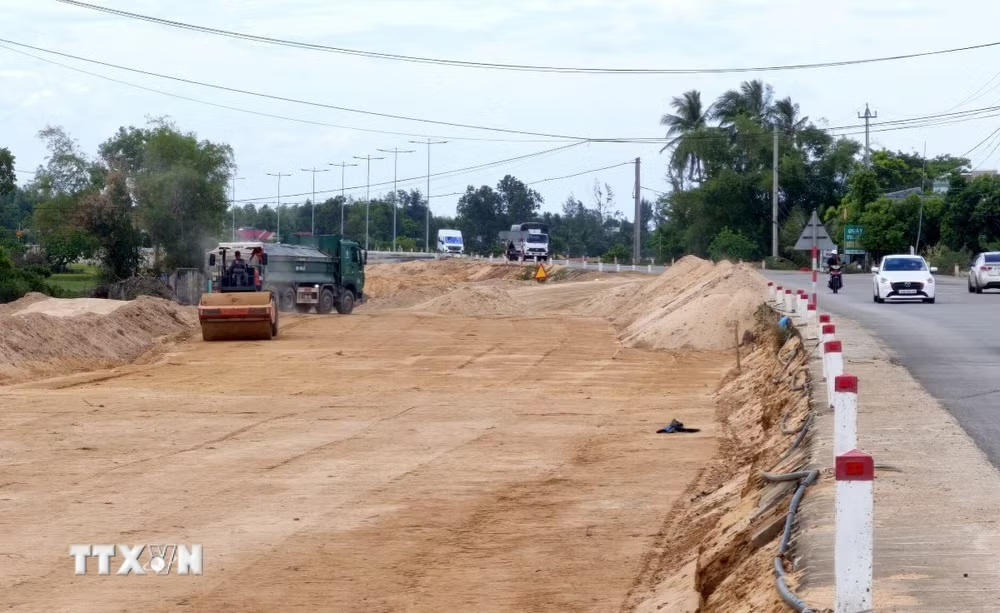
To realize this orientation, the city is focusing on preparing a series of dynamic, large-scale key projects. These projects aim not only to expand urban space but also to build a synchronized infrastructure system, increasing connectivity among production areas, residential centers, seaports, and trade hubs.
Notably, implementing these projects in a sequential and interconnected manner can generate a resonance effect. Once transport infrastructure is completed, connectivity among urban areas, industrial parks, and logistics centers will be improved, thereby attracting new businesses, workers, and capital flows to the southern region.
A Series of Large-Scale Urban Areas Preparing for Implementation
One of the focal points in Da Nang’s southern development expansion strategy is the formation of a modern, multi-functional urban chain to meet the housing, commercial, service, and accommodation needs of the future workforce.
The Tam Ky area boasts advantages in natural landscapes, river systems, beaches such as Tam Thanh and Tỉnh Thủy, and the Song Dam wetland. These are favorable conditions for developing ecological, resort, commercial, and multi-functional urban areas.
Among them, the Mixed-Use Urban Area project south of the Nguyen Tat Thanh axis, located in Quang Phu ward, is a notable highlight.
The project covers over 296 hectares with a total investment of more than 18.5 trillion VND, listed among the large-scale dynamic and key projects for the 2025–2030 period under the Da Nang City Party Committee’s Action Program.
According to the plan, construction is expected to commence around April 30, 2027, and be implemented in multiple phases from 2026 to 2038. Planned developments include adjacent houses, villas, land plots, and commercial and service facilities.
A notable point is that at least 20% of the total residential land area within the project scope is reserved for social housing development. Allocating this land fund in a large-scale urban area not only diversifies housing supply but also enables workers and low-income earners to access residential areas with synchronized infrastructure and amenities.
At the city’s southern gateway, the Chu Lai Urban Area in Nui Thanh commune is also being prepared with a scale of over 188 hectares and a total investment of more than 18.8 trillion VND. The project is expected to break ground in December 2026.
Upon completion, the urban area is projected to supply over 7,800 housing products, including adjacent houses, villas, apartment buildings, social housing, and subdivided land plots.
With massive investment, the project is expected to help shape a new urban landscape in Nui Thanh while meeting the surging housing demand driven by growing industrial, logistics, and commercial activities.
Meanwhile, the Truong Giang Riverside Urban Area in Quang Phu and Ban Thach wards has a total investment of over 3 trillion VND and covers more than 74 hectares. According to the plan, the first products of the project will be put into operation by early 2031.
Developing urban areas along the Truong Giang River also opens up room to exploit landscape advantages, ecological space, and urban service activities.
Overall, these projects do not merely create additional real estate supply; they aim to build an urban system capable of connecting with economic, industrial, and service centers. When implemented synchronously, the southern region can form an interconnected urban chain, laying the foundation for urbanization and economic restructuring.
Urban Development Coupled with Ecological Conservation and Tourism
Alongside housing and commercial projects, Da Nang is also researching ideas for urban development tied to nature conservation, science, and ecotourism.
Of note is the proposal to build a science park combined with entertainment and tourism in the approximately 200-hectare Song Dam wetland. The city is currently working with foreign investors to study development directions for this area.
Song Dam is considered a valuable ecological space featuring water surfaces, vegetation, and habitats for numerous migratory bird species. Therefore, development research must prioritize ecosystem conservation while appropriately leveraging scientific research, environmental education, and ecotourism.
If properly planned, Song Dam could become a highlight in the southern urban structure, contributing to distinct tourism products, enhancing living space quality, and attracting high-quality human resources.
Additionally, in the coastal areas of Thang An, Thang Truong, and Tam Anh, several investors are researching and proposing ideas to develop urban areas combined with golf courses and tourism, spanning from several hundred to over 1,000 hectares.
These proposals demonstrate that the development potential of the southern region lies not only in industry and logistics but also expands into high-quality tourism, resorts, and services.
According to Mr. Nguyen Minh Nam, Deputy Director of the Da Nang City Land Fund Development Center, the unit has prepared the infrastructure to arrange resettlement for households affected during the initial phase of urban development staging. Simultaneously, investors must strictly adhere to the implementation roadmap to meet housing demand and promote socio-economic development in the locality.
This is a crucial factor, as the progress of site clearance, resettlement arrangement, and technical infrastructure completion directly affects the feasibility of executing large-scale projects.
A Nearly 89-km Route and Cua Lo Channel Create Infrastructure Breakthroughs
If urban areas lay the foundation for expanding residential space, transport, seaport, and energy infrastructure will be the decisive factors for the economic growth of the southern pole.
Among them, the high-speed connecting road project from the city center to Chu Lai is evaluated as a strategically significant work for intra-regional connectivity.
According to Da Nang City Vice Chairman Phan Thai Binh, the project spans nearly 89 kilometers in length and is expected to break ground on March 29, 2027.
This transport route is oriented toward strengthening connectivity between the central area and the southern key economic zone. The project utilizes a combination of public investment, public-private partnership (PPP) methods, and land-use bidding.
Upon completion, the road is expected to shorten travel time between regions, facilitating links among urban axes, logistics centers, industrial parks, the High-Tech Park, the Free Trade Zone, two airports, and the seaport system.
For production and logistics activities, improving transport connectivity is of particular importance. Goods can be transported more smoothly among industrial zones, warehouses, seaports, and airports, thereby reducing logistics costs and enhancing supply chain efficiency.
Beyond serving transportation needs, the road is also expected to form a continuous economic development corridor between central Da Nang and Chu Lai, expanding investment attraction along strategic transport axes.
Investing 7.585 Trillion VND to Construct the Cua Lo Channel
Another critical project in the southern development strategy is the investment and construction project for the Cua Lo channel within the Chu Lai Open Economic Zone.
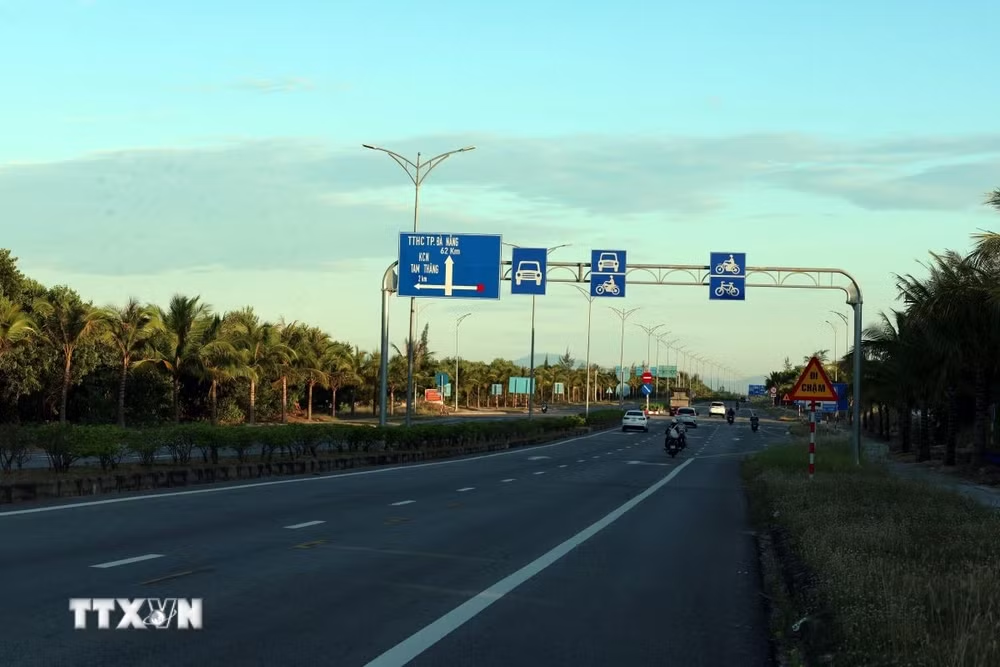
The project has a total investment of 7.585 trillion VND, slated to commence in late December 2026, aiming to construct a vessel channel through Cua Lo in Nui Thanh commune along with a synchronized channel protection and maritime navigation aid system.
According to the orientation, the project will accommodate vessels up to 50,000 DWT, contributing to enhanced seaport exploitation capacity and expanding maritime freight transport capabilities.
This is regarded as an important step in completing logistics infrastructure in the Chu Lai – Nui Thanh area. With upgraded vessel-receiving capacity, enterprises will have better conditions to organize import-export operations, transport raw materials, and distribute products.
Notably, the advantages of the Cua Lo channel are not limited to the Chu Lai Open Economic Zone. The project is also expected to open gateway trade routes to the East Sea for the Central Highlands, Southern Laos, Northeast Cambodia, and Thailand.
By connecting with regional economic corridors, Da Nang gains further opportunities to promote its role as a logistics hub for the Central region, strengthening ties between domestic production centers and international maritime transport systems.
In the long run, the combination of roadways, seaports, and aviation hubs will create a competitive edge for the southern region, especially in attracting manufacturing industries with heavy freight transport demands.
Gas-to-Power Project Chain Lays the Foundation for Industrial Attraction
Alongside transport and seaport infrastructure, energy is identified as one of the key pillars in Da Nang’s southern economic development strategy.
Currently, the city is coordinating with Vietnam National Energy and Petroleum Group (Petrovietnam) and related units to promote the implementation of the Blue Whale (Cá Voi Xanh) gas field development project and the gas-to-power project chain.
These projects hold significant importance for supplementing energy sources to serve production, foster industrial development, and ensure long-term energy security.
For an area oriented toward large-scale industrial, logistics, and manufacturing development like Chu Lai – Tam Ky – Núi Thành, stable energy infrastructure is a vital prerequisite to elevate investment appeal.
When energy projects are advanced alongside the completion of transport and seaport systems, the southern region will have better conditions to attract businesses in processing, manufacturing, technical services, and logistics.
The combination of three strategic infrastructure groups—transport, seaports, and energy—also establishes a long-term development foundation, preventing fragmented urban and industrial growth.
This serves as the basis for Da Nang to gradually build an economic pole capable of generating high added value, rather than merely expanding population scale and urban area.
Expanding Urban Space, Anticipating a Population of 6.5 Million
One of the driving forces pushing Da Nang to expand its space southward is the demand for urban development amid projected population growth.
Prior to administrative restructuring, the former Quang Nam area had a relatively low urbanization rate. This presents both a challenge and a spatial opportunity for the city to reorganize its development layout, forming large-scale, modern, and smart new urban zones.
According to the orientation, Da Nang targets an urbanization rate of 63.7% by 2030.
The city’s total population is projected to reach approximately 5.5 million by 2040 and about 6.5 million by 2050. To meet development requirements, the city aims to organize its urban system synchronously, completing and elevating criteria for a Grade-I urban area while preparing conditions to transition toward a special urban area in the subsequent phase.
By 2050, the entire city is projected to feature around 30 urban areas, comprising 23 existing urban zones and 7 new urban zones formed from commune-level administrative units.
In this context, developing the southern region plays a crucial role in redistributing population, easing pressure on the central area, and creating new economic spaces.
However, the urbanization process also sets high demands on planning quality. Urban areas must be developed in conjunction with public transit systems, social housing, schools, hospitals, green spaces, and public amenities.
In particular, attracting workers to industrial zones and logistics centers must be accompanied by the provision of housing and essential services. This is a decisive factor for the long-term sustainability of urban development.
Unlocking Resources to Target GRDP Growth Above 11%
The concurrent preparation for urban and strategic infrastructure projects demonstrates Da Nang’s robust transition from planning orientation to practical execution, progressively expanding its economic space southward.
According to Da Nang City Vice Chairman Phan Thai Binh, launching key projects will help shape a new urban space, create growth momentum, attract a large workforce to live and work, and steer toward inclusive and sustainable development in line with the master plan.
In 2026, Da Nang targets GRDP growth of over 11%. Unlocking resources and harnessing the potential of the southern growth pole is considered a vital factor to maintain double-digit growth rates in subsequent years.
By the end of October 2026, total State budget revenue in the city was estimated at over 76.3 trillion VND, equivalent to 115% of the estimate. This is a positive signal, providing extra fiscal space for the city to focus resources on socio-economic development programs.
Nevertheless, for large-scale projects to genuinely become growth drivers, the critical challenge lies not only in total investment capital but also in implementation capacity, site clearance progress, resource mobilization, and post-completion operational efficiency.
The city is focusing on reviewing, finalizing, and proposing mechanisms and policies to remove bottlenecks regarding institutions, administrative procedures, land, and investment. Simultaneously, it aims to accelerate the execution and disbursement of public investment capital, improving the investment and business environment toward transparency, openness, and stability.
Another requirement is to couple strategic infrastructure development with science and technology, innovation, and digital transformation. This will serve as the foundation to boost labor productivity, improve growth quality, and increase value-added components in production and service activities.
For urban projects, ensuring progress must go hand in hand with planning quality, construction standards, and infrastructure connectivity. In particular, attention must be paid to arranging social housing, educational and healthcare facilities, environmental works, and public utilities to meet future residents’ needs.
The Southern Growth Pole Opens a New Development Space for Da Nang
With a series of projects under preparation, the Chu Lai – Tam Ky – Nui Thanh area stands before a powerful transformation opportunity—evolving from a space with abundant reserves into a large-scale urban, industrial, logistics, and energy hub.
The distinctive feature of this development orientation is the integration of multiple economic pillars. New urban zones establish the residential and service foundation; transport and seaports expand connectivity; while energy projects facilitate industrial and manufacturing growth.
If implemented synchronously, these projects will create spillover effects not only within city limits but also reaching localities across the Central region, Central Highlands, and the Mekong sub-region.
In the long run, the southern growth pole is expected to serve as a complementary counterpart to the central area, helping redistribute resources, attract investment, and elevate Da Nang’s competitiveness.
However, opportunities will only turn into true drivers when planning is implemented consistently, projects maintain their schedules, resources are allocated efficiently, and development benefits reach citizens and businesses.
With a multi-polar, multi-center development orientation alongside strategic projects underway, Chu Lai – Tam Ky – Nui Thanh is expected to become a key engine, propelling Da Nang into a new development era, expanding its economic space, and reaffirming its role as a central trade, manufacturing, and service hub in Central Vietnam.
Source:
https://www.vietnamplus.vn
Amasis Shipping Co., Ltd.
📞 +84 906 660 888
📩 info@amss.com.vn
🏘️27-29 Ngo Thi Bi Street, Tan Hung Ward, Hochiminh City