
Geopolitical disruptions in the Middle East are reshaping global container shipping networks, prompting carriers to adjust routes and port connections. UNCTAD data for Q3 2026, analyzed by Sea-Intelligence, shows rising port connectivity at several locations in West Africa, the Gulf of Oman and the Indian Ocean region compared with pre-crisis benchmarks.
Geopolitical Disruptions Reshape Global Shipping Networks
Escalating geopolitical tensions in the Middle East are forcing container shipping lines to reassess their service networks, routing strategies and transshipment arrangements. While ports directly exposed to regional disruptions may face declining connectivity, ports in other regions are recording gains as carriers reorganize their operations.
Data from the United Nations Conference on Trade and Development (UNCTAD)’s Port Liner Shipping Connectivity Index (PLSCI), analyzed by Sea-Intelligence, highlights these shifts in global maritime connectivity during the third quarter of 2026.
The analysis uses Q3 2023 as the pre-crisis benchmark for disruptions in the Red Sea and Q4 2025 as the comparison point for the closure of the Strait of Hormuz.
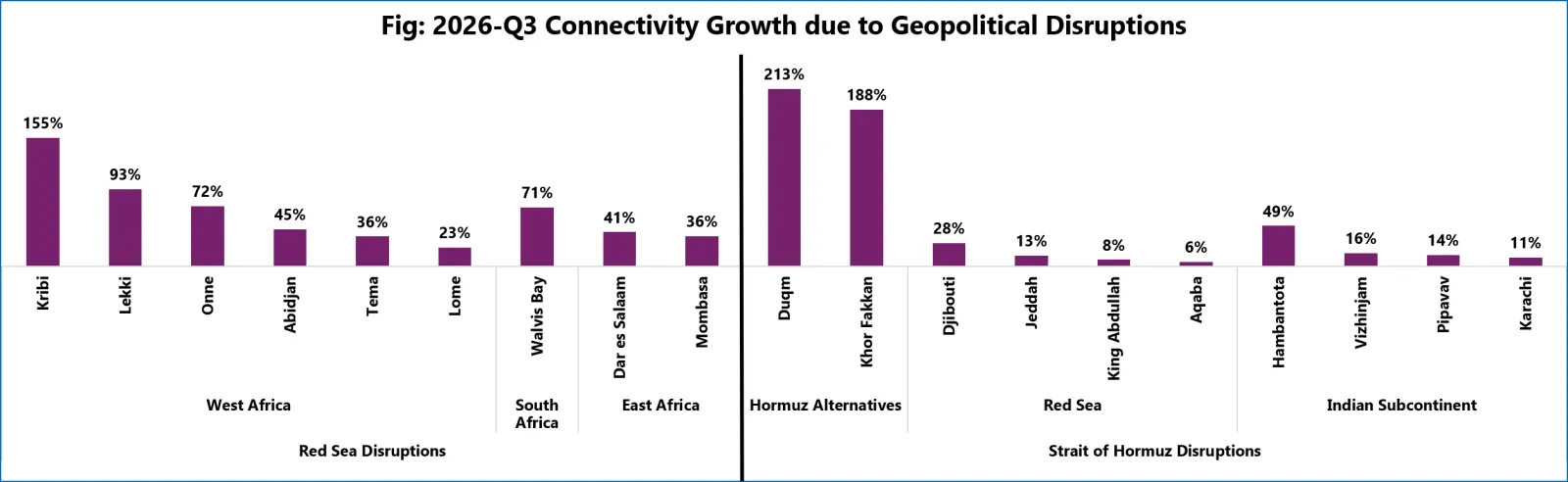
Changes in port connectivity reflect how shipping networks respond to disruptions, including route diversions, adjustments to port calls and the redistribution of transshipment activity.
West African Ports Gain Importance in Container Shipping
Rerouting vessels away from disrupted maritime corridors can extend transit times and change carriers’ choices of transshipment hubs. When services are diverted around the Cape of Good Hope, ports along Africa’s Atlantic coast may gain strategic importance within global container shipping networks.
According to the data cited in the analysis, several West African ports recorded increases in connectivity during the period under review.
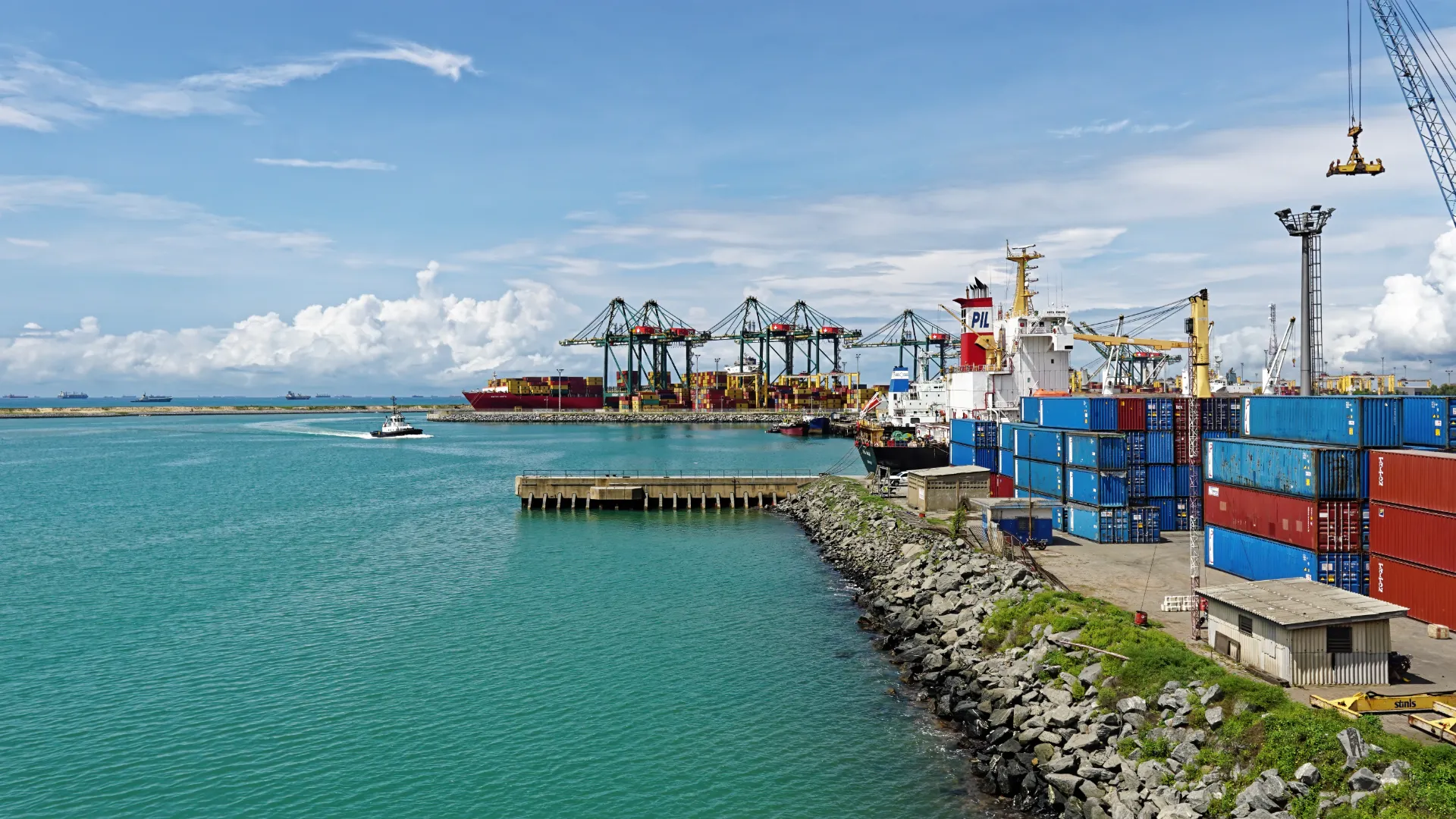
Walvis Bay has also been highlighted as a potential alternative to Durban amid congestion at the South African port. However, the extent to which one port can substitute for another depends on several operational factors.
These include geographical location, vessel-handling capacity, terminal efficiency and connections to existing shipping services. As a result, an increase in port connectivity does not necessarily mean that a port can fully replace another major hub.
Gulf of Oman Ports Record Significant Connectivity Gains
The closure of the Strait of Hormuz has altered operating conditions and routing decisions for shipping lines serving the Gulf of Oman and surrounding maritime corridors.
According to Sea-Intelligence’s analysis of UNCTAD data, Duqm and Khor Fakkan recorded increases in their Port Liner Shipping Connectivity Index of 213% and 188%, respectively, compared with their pre-crisis benchmarks.
These gains indicate changes in the ports’ connections to scheduled container shipping networks as carriers adjust their service patterns in response to regional disruptions.
However, connectivity growth should not be interpreted as direct evidence of higher container throughput or improved port efficiency. The PLSCI measures a port’s integration into the network of scheduled liner shipping services rather than the actual volume of cargo handled.
East African and Indian Ocean Ports See Changing Transshipment Patterns
Beyond the Gulf of Oman, ports in East Africa and the Indian subcontinent are also experiencing changes in their roles within regional and international shipping networks.
As carriers reorganize routes to reduce exposure to conflict-affected areas, some ports may take on additional transshipment functions or gain stronger links to scheduled container services.
The data cited in the analysis shows substantial increases in connectivity at Dar es Salaam in Tanzania and Hambantota in Sri Lanka during the reporting period.
These developments highlight how geopolitical disruptions can redistribute connectivity across maritime regions. Ports that are not directly located within a conflict zone may nevertheless experience changes in their strategic importance as shipping lines revise routes and port-call schedules.
Port Connectivity Is Not the Same as Cargo Throughput
Although the PLSCI provides an important indicator of a port’s position within global container shipping networks, it does not independently measure cargo volumes, congestion levels or operational productivity.
A port can record stronger connectivity because it has gained links to more scheduled services or become more integrated into shipping networks. Yet this does not automatically mean that it is handling more containers or operating more efficiently.
To assess the full impact of geopolitical disruptions on maritime logistics, port connectivity data should be evaluated alongside container throughput, terminal capacity, congestion indicators and changes to shipping schedules.
For shipping lines, port operators and cargo owners, these indicators can provide a more comprehensive understanding of how disruptions affect routing options, transit times and supply chain reliability.
Global Container Shipping Networks Continue to Adapt
The latest connectivity trends underline the flexibility of global container shipping networks in responding to geopolitical uncertainty. As carriers adjust routes and transshipment arrangements, the relative importance of individual ports can change significantly.
West African ports, facilities in the Gulf of Oman and selected ports across the Indian Ocean are among the locations identified in the Q3 2026 analysis as experiencing connectivity gains against earlier benchmarks.
Nevertheless, the long-term effects will depend on the duration of geopolitical disruptions, the evolution of shipping routes and the ability of ports to accommodate changes in vessel calls and cargo flows.
For the global logistics industry, monitoring port connectivity alongside operational and trade data will remain essential to understanding how maritime disruptions are reshaping supply chains.
Source:
https://phaata.com
https://thuonghieucongluan.com.vn
Amasis Shipping Co., Ltd.
📞 +84 906 660 888
📩 info@amss.com.vn
🌍 www.amss.com.vn
🏘️27-29 Ngo Thi Bi Street, Tan Hung Ward, Hochiminh City