
The draft Law on Vietnam Maritime and Inland Waterways (Amended) proposes abolishing 54 administrative procedures, amending 46 procedures, and cutting up to 7 out of 9 conditional business sectors. This is expected to be a crucial reform step, creating favorable conditions for businesses and boosting the development of seaport infrastructure, water transport, and logistics.
Merging Two Laws to Streamline the Maritime and Inland Waterways Legal System
The Ministry of Construction is spearheading the drafting project of the Law on Vietnam Maritime and Inland Waterways (Amended), aiming to unify the legal framework governing maritime activities and inland waterway traffic. The new law seeks to overcome existing shortcomings arising from scattered and overlapping regulations, which have caused difficulties in implementation and state management.
According to the formulation orientation, the amended law will merge the 2015 Vietnam Maritime Code and the 2004 Law on Inland Waterway Traffic.
Comprising 21 chapters and 318 articles, the draft reduces the total number of articles by approximately 30% compared to the two current laws. This streamlining not only makes the specialized legal system more synchronized but also facilitates organizations, individuals, and businesses in looking up and applying legal regulations.
Through this merger, the drafting agency aims to enhance the effectiveness and efficiency of state management while establishing a legal foundation to meet the development requirements of the maritime and waterway sectors in the new era.
Embracing Automation Technology and Infrastructure Planning with a 100-Year Vision
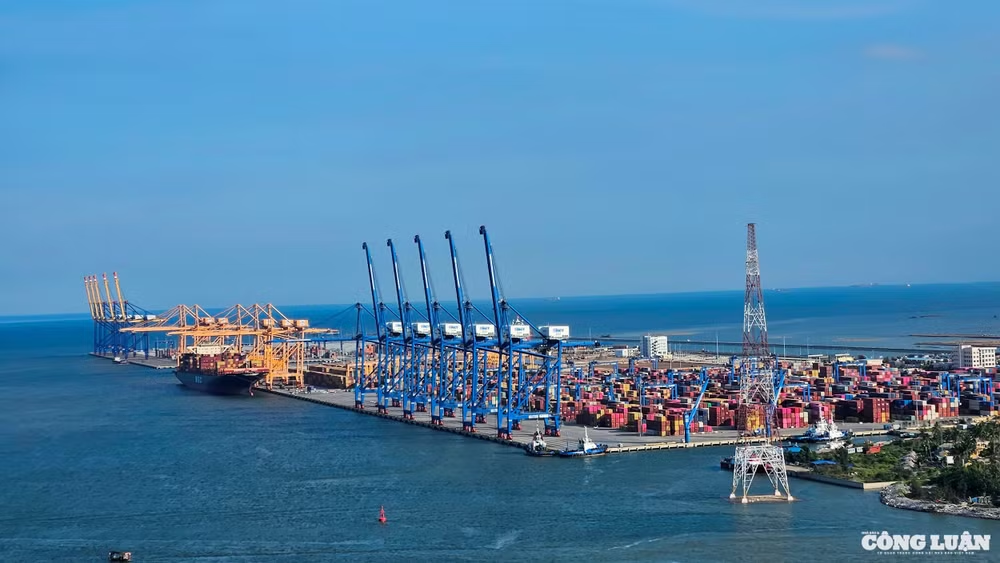
One of the most notable highlights of the draft is the restructuring of regulations concerning maritime infrastructure, inland waterway infrastructure, and dry ports.
Accordingly, regulations on seaports, inland waterways ports, inland waterways wharves, and dry ports will be integrated into a unified legal framework, linked with the requirements of logistics connectivity and multimodal transport development.
Regarding transport vehicles, the draft aims to standardize regulations on the classification, registration, and inspection of watercraft. The concept of “inland waterway transport vehicles” is replaced by “river vessels,” while professional practice conditions, legal liabilities, and standards for crew members are standardized.
Inspection activities are also adjusted toward enhanced socialization by recognizing qualified inspection organizations to participate in specialized duties.
Notably, the draft introduces a legal basis for applying new technologies in water transport activities. Regulations related to remote vessel operation, automation technology, and remote monitoring and dispatching are slated for inclusion in the code.
Additionally, the scope of regulation is expanded to cover the operations of submersibles, seaplanes, recreational and tourism watercraft, and other services in Vietnam’s maritime zones.
These provisions aim to establish a legal corridor for new transport models while meeting the trends of technological application and exploitation method transformation in the maritime and waterway sectors.
Expanding Investment Attraction, Green Ports, and Logistics Development
Regarding infrastructure development, the draft proposes mechanisms for selecting strategic investors for large-scale seaport projects and regional hub inland waterway ports.
In particular, the master planning for maritime infrastructure, inland waterway infrastructure, and dry ports is oriented with a long-term 100-year vision. This content aims to build a foundation for synchronized infrastructure development capable of meeting long-term transport demand and logistics connectivity.
Along with this, preferential policies and support are proposed for strategic investors, port developers, maritime fleets, the maritime industry, logistics, and transportation.
Another notable orientation is encouraging the development of green ports and eco-friendly transport vehicles. The draft outlines policies to promote the use of electric vessels, alternative fuels, renewable energy, shore-to-ship power supply infrastructure, and emission-reduction technologies.
This orientation aligns with sustainable development requirements, enhances infrastructure exploitation efficiency, and steadily drives the green transition in maritime and inland waterway transport.
Regarding transport operations, the draft further refines regulations on domestic maritime transport, domestic waterway transport, and multimodal transport. Furthermore, management mechanisms for international container transport operations are supplemented to ensure consistency with international commitments and the rights of Vietnamese businesses.
Abolishing 54 Administrative Procedures, Cutting up to 7 out of 9 Conditional Business Sectors
Administrative procedure and business condition reform remains one of the core contents of the draft Law on Vietnam Maritime and Inland Waterways (Amended).
According to the proposal, once the law and its guiding implementation documents are enacted, 54 administrative procedures in the maritime and waterway sectors will be abolished, while 46 others will be amended and supplemented.
Notably, the number of conditional investment and business sectors is projected to be cut by up to 7 out of 9 sectors. This orientation aims to lower market entry barriers, simplify compliance requirements, and create more operating headroom for businesses.
Aside from procedure cuts, the draft also proposes greater decentralization and delegation of authority to local governments in the state management of inland waterway traffic.
Certain technical inspection and certification duties are also oriented toward decentralization to specialized agencies and qualified inspection organizations.
This shift in management methodology is expected to reduce the burden on state regulatory bodies while enhancing local proactivity and operational efficiency.
Creating New Momentum for Water Transport and the Maritime Industry
The formulation of the Law on Vietnam Maritime and Inland Waterways (Amended) not only targets the consolidation of legal regulations but also lays the foundation for the long-term development of the entire industry.
With the proposal to abolish 54 administrative procedures, amend 46 procedures, and cut up to 7 out of 9 conditional business sectors, the draft aims to lower compliance costs and foster a more favorable business environment for enterprises.
Concurrently, regulations on seaport infrastructure development, inland waterway ports, multimodal transport, automation technology application, and green transition are expected to expand logistics connectivity and elevate the operational efficiency of the waterway transport system.
If passed and implemented synchronously, the new law will establish a unified legal framework for maritime and inland waterway operations, helping resolve bottlenecks in infrastructure management and exploitation, attract investments, and propel the sustainable, modern development of water transport.
Source:
https://congluan.vn
https://vlr.vn
Amasis Shipping Co., Ltd.
📞 +84 906 660 888
📩 info@amss.com.vn
🏘️27-29 Ngo Thi Bi Street, Tan Hung Ward, Hochiminh City