
Iran’s Islamic Revolutionary Guard Corps (IRGC) claims that a large crude oil tanker exploded and caught fire after striking a sea mine while attempting to leave the Strait of Hormuz via a route not authorized by Iran. The IRGC has also warned that vessels switching off their navigation and tracking systems while transiting the strait will be classified as hostile to Iran.
The incident has heightened concerns over maritime safety in the Strait of Hormuz, one of the world’s most important energy transportation routes. Meanwhile, oil markets remain volatile amid ongoing conflicts in the Middle East and the risk of disruptions to crude oil supplies.
IRGC Claims Oil Tanker Exploded After Hitting a Sea Mine in the Strait of Hormuz
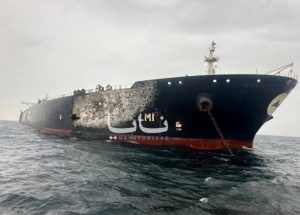
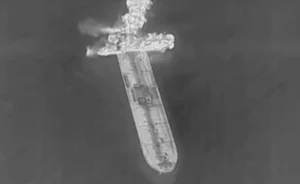
On October 11, the IRGC Navy released images and videos that it claimed showed a large crude oil tanker exploding and catching fire while attempting to leave the Strait of Hormuz through a route that Iranian authorities had not authorized.
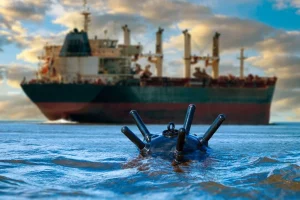
According to the IRGC, the tanker had switched off its navigation and tracking systems before entering a route designated by Iran as a hazardous area. The vessel subsequently suffered a powerful explosion after striking a naval mine, triggering a large fire visible from the coast.
On October 12, the IRGC further claimed that the vessel was the third oil tanker involved in similar incidents over a two-day period while attempting to use routes that Iran considered unauthorized.
However, the IRGC has not clearly disclosed the vessel’s name, nationality, flag state, or operating company. The claim that a sea mine caused the incident has also not been independently verified.
IRGC Warns Ships Disabling Tracking Systems Will Be Classified as Hostile
The IRGC Navy has warned that all commercial vessels and oil tankers switching off their navigation or tracking systems while transiting the Strait of Hormuz will be classified as hostile to Iran and could face decisive countermeasures.
The IRGC has also warned vessels against violating safety requirements or using routes that have not been authorized by Iranian authorities.
These warnings have increased operational risks for shipping companies and energy transportation operators, particularly those whose vessels must transit the Strait of Hormuz, a critical route connecting Middle Eastern oil producers with international markets.
What Have International Maritime Authorities Reported?
The United Kingdom Maritime Trade Operations (UKMTO) reported an incident involving an oil tanker leaving the Strait of Hormuz that was struck by an unidentified object on its side, causing damage to the vessel.
According to the report, all crew members were safe. At the time of reporting, there was no confirmed information regarding environmental damage, and the relevant authorities were investigating the incident.
Rising Tensions in the Strait of Hormuz Increase Risks to Global Oil Transportation
The Strait of Hormuz is one of the world’s most strategically important energy shipping routes. Attacks on oil tankers and restrictions on maritime traffic have therefore raised concerns about the continuity of crude oil shipments from the Middle East.
If the situation deteriorates further, shipping companies may need to reroute vessels or introduce additional security measures. These changes could affect transit times, shipping schedules, and marine insurance costs.
For importers and exporters, these risks could increase logistics expenses and create greater uncertainty in supply chain planning, particularly for businesses that depend on oil shipments and industrial cargo moving through the region.
Oil Prices Fluctuate Amid Supply Risks and Expectations for Russian Supplies
Tensions in the Middle East remain a key factor influencing oil markets. Prices have come under pressure from supply disruption risks and attacks on targets in the region, while expectations of additional Russian diesel supplies entering the market have also influenced price movements.
A Reuters report indicated that crude oil prices rose on October 12 after attacks in Saudi Arabia and risks to oil tankers overshadowed expectations of additional fuel supplies. On October 13, prices subsequently declined as market participants reassessed competing supply-side factors.
These developments illustrate that although expectations of additional supplies may put downward pressure on prices at certain times, maritime security risks can still push oil prices higher.
Conclusion: The Strait of Hormuz Remains a Critical Risk Point for Global Energy Markets
The incident involving an oil tanker that the IRGC claims struck a sea mine in the Strait of Hormuz highlights the security risks facing vessels navigating one of the world’s most important energy transportation routes. Warnings concerning vessels that disable their tracking systems have added further uncertainty for shipping companies and cargo transportation operators.
Looking ahead, markets will continue to monitor security developments in the Middle East, shipping activity through the Strait of Hormuz, and global oil supply trends. These factors will remain important determinants of energy prices, transportation costs, and international supply chain management.
Source :
Amasis Shipping Co., Ltd.
📞 +84 906 660 888
📩 info@amss.com.vn
🏘️27-29 Ngo Thi Bi Street, Tan Hung Ward, Hochiminh City