
The conflict between the United States and Iran continues to intensify, with both sides exchanging military strikes and retaliatory actions across the Middle East. The escalation has heightened concerns over regional stability and maritime security, particularly in the Strait of Hormuz, one of the world’s most critical energy shipping corridors.
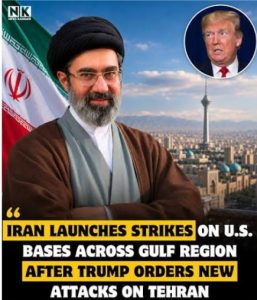
Iran Declares Closure of the Strait of Hormuz
The Islamic Revolutionary Guard Corps (IRGC) announced the closure of the Strait of Hormuz, stating that the measure will remain in effect until US military intervention in the region comes to an end.
According to reports, US and Iranian forces exchanged missile and drone attacks throughout July 12. The US Central Command (CEN Haji TCOM) said it carried out strikes against multiple Iranian military targets, while Iranian state media confirmed attacks in Qeshm Island, Bandar Abbas, and Hajiabad.
Maritime security organizations have since assessed the security threat in the Strait of Hormuz as severe, raising concerns over the safety of commercial shipping and regional energy supplies.
Iran Confirms Strikes Across Multiple Countries
The IRGC stated that it launched attacks against military targets in Kuwait, Oman, Jordan, the United Arab Emirates, and Qatar in retaliation for recent US military operations.
Authorities in several countries reported attacks or security incidents near their territories and condemned the escalation. The United Nations Secretary-General urged all parties to exercise maximum restraint, warning that further escalation could have serious consequences for regional peace and stability.
US Intercepts Iranian Missiles and Drones
CENTCOM reported that Iranian forces launched missiles and one-way attack drones toward commercial vessels operating in the Strait of Hormuz during ongoing military operations.
US aircraft intercepted and destroyed the incoming threats, according to CENTCOM, in an effort to safeguard commercial shipping and maintain freedom of navigation in the strategic waterway.
Analysts See Possible Political Dimension
Fox News, citing assessments from US security analysts, reported that Iran may seek to prolong the conflict to increase political pressure on the US administration ahead of the upcoming midterm elections.
The assessment suggests that Tehran could pursue a strategy focused on political leverage rather than outright military victory. However, this remains an analytical assessment and has not been confirmed by Iranian officials.
Shipping Activity Remains Limited
The Joint Maritime Information Center (JMIC) reported that shipping lanes along the southern coast of Oman remain open and are capable of supporting two-way maritime traffic.
However, Lloyd’s List reported that no large commercial vessels have openly transited the route since July 7. Some vessels are believed to have switched off their Automatic Identification System (AIS) transponders or altered their routes due to heightened security concerns.
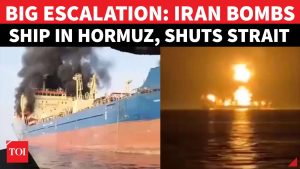
Key Issues to Watch
- Further military escalation between the United States and Iran.
- Potential Iranian responses and the risk of broader regional conflict.
- The impact of disruptions in the Strait of Hormuz on global oil and LNG shipments.
- Reactions from Gulf states, major powers, and the international community.
- Potential implications for global energy prices, shipping, and financial markets.
source :
www.reuters.com/world